Can a 2 Phase Decanter Centrifuge be used for separating oil from sand?
As a supplier of 2 Phase Decanter Centrifuges, I often encounter inquiries about the versatility and application range of our products. One question that frequently comes up is whether a 2 Phase Decanter Centrifuge can be used for separating oil from sand. In this blog post, I will delve into the technical aspects, practical considerations, and real – world applications to provide a comprehensive answer. 2 Phase Decanter Centrifuge
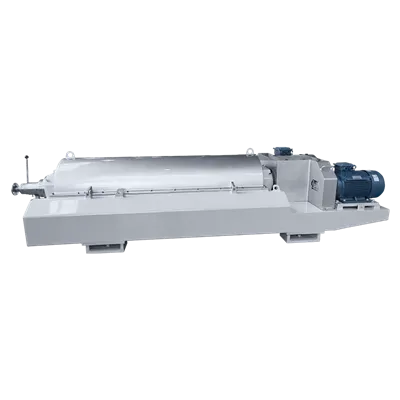
Understanding the 2 Phase Decanter Centrifuge
A 2 Phase Decanter Centrifuge is a high – performance separation device that works on the principle of centrifugal force. It is designed to separate two immiscible phases of different densities from a liquid – solid or liquid – liquid mixture. The centrifuge consists of a rotating bowl and a screw conveyor. As the mixture enters the centrifuge, the high – speed rotation generates a strong centrifugal force, which causes the denser phase to move towards the outer wall of the bowl, while the lighter phase remains closer to the center. The screw conveyor then transports the separated phases out of the centrifuge.
The key advantage of a 2 Phase Decanter Centrifuge lies in its ability to achieve continuous and efficient separation. It can handle a wide range of feed flow rates and is suitable for various industries, including wastewater treatment, food processing, and oil and gas.
The Challenge of Separating Oil from Sand
The process of separating oil from sand is a complex one, mainly due to the nature of the oil – sand mixture. Oil – sand deposits, also known as tar sands, contain a mixture of sand, clay, water, and bitumen (a thick, heavy form of crude oil). The bitumen is highly viscous and adheres strongly to the sand particles, making it difficult to separate.
Traditional methods for separating oil from sand include hot water extraction, which involves heating the oil – sand mixture with water and chemicals to break the bond between the bitumen and the sand. However, this method has several drawbacks, such as high energy consumption, large water usage, and environmental concerns.
How a 2 Phase Decanter Centrifuge Can Help
A 2 Phase Decanter Centrifuge can be an effective solution for separating oil from sand under certain conditions. The high centrifugal force generated by the centrifuge can overcome the adhesion between the bitumen and the sand particles, allowing for the separation of the oil and solid phases.
Firstly, the pre – treatment of the oil – sand mixture is crucial. The mixture needs to be properly conditioned to reduce the viscosity of the bitumen. This can be achieved by adding solvents or heat to the mixture. Once the mixture is conditioned, it can be fed into the 2 Phase Decanter Centrifuge.
Inside the centrifuge, the sand, which is the denser phase, will be forced towards the outer wall of the bowl and removed by the screw conveyor. The oil, being the lighter phase, will collect near the center of the bowl and can be discharged separately. The efficiency of the separation depends on several factors, including the centrifuge’s rotational speed, the feed rate of the mixture, and the properties of the oil – sand mixture itself.
Case Studies and Real – World Applications
There have been several successful applications of 2 Phase Decanter Centrifuges in the oil – sand separation process. In some small – scale or experimental settings, centrifuge technology has been used to recover oil from oil – sand waste. By using a 2 Phase Decanter Centrifuge, operators have been able to achieve a significant reduction in the oil content of the sand, which not only recovers valuable oil but also reduces the environmental impact of the waste.
In addition, in areas where water resources are limited, the 2 Phase Decanter Centrifuge offers a more water – efficient alternative to traditional hot – water extraction methods. This is particularly important in regions with strict water usage regulations.
Technical Considerations
When using a 2 Phase Decanter Centrifuge for oil – sand separation, there are several technical considerations that need to be taken into account.
- Material Compatibility: The centrifuge components need to be made of materials that are resistant to corrosion and abrasion. Since the oil – sand mixture can be highly abrasive and may contain corrosive substances, the choice of materials such as stainless steel or special alloys is essential to ensure the long – term durability of the centrifuge.
- Centrifuge Design: The design of the centrifuge, including the bowl diameter, the length – to – diameter ratio, and the screw conveyor design, needs to be optimized for the specific properties of the oil – sand mixture. For example, a larger bowl diameter can provide a greater centrifugal force, while an appropriate screw conveyor design can ensure efficient solids discharge.
- Control System: A sophisticated control system is required to monitor and adjust the operating parameters of the centrifuge, such as the rotational speed, the feed rate, and the differential speed of the screw conveyor. This ensures that the centrifuge operates at its optimal performance and achieves the desired separation efficiency.
Advantages and Limitations
Advantages
- Efficiency: A 2 Phase Decanter Centrifuge can achieve continuous separation, which is more efficient than batch – type separation methods.
- Versatility: It can handle a wide range of oil – sand mixtures with different properties, making it suitable for various applications.
- Environmental Friendliness: Compared to traditional methods, it can reduce water usage and energy consumption, which is beneficial for the environment.
Limitations
- High Initial Investment: The cost of purchasing and installing a 2 Phase Decanter Centrifuge can be relatively high, especially for large – scale operations.
- Sensitivity to Feed Properties: The performance of the centrifuge is highly dependent on the properties of the oil – sand mixture. Any significant changes in the feed properties, such as viscosity or particle size distribution, can affect the separation efficiency.
Conclusion
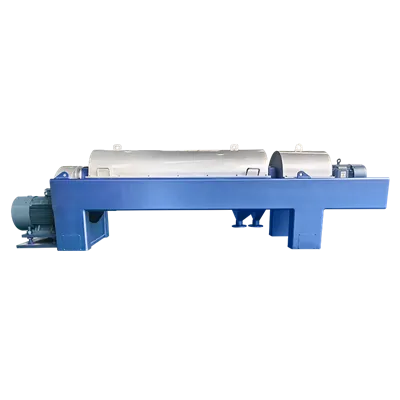
In conclusion, a 2 Phase Decanter Centrifuge can be a viable option for separating oil from sand. With proper pre – treatment and optimization of the centrifuge’s operating parameters, it can achieve efficient and continuous separation of the oil and solid phases. However, it is important to consider the specific requirements of the application, including the technical considerations, advantages, and limitations.
3 Phase Decanter Centrifuge If you are interested in exploring the use of a 2 Phase Decanter Centrifuge for your oil – sand separation needs, I encourage you to contact us. Our team of experts is ready to provide you with detailed information, technical support, and customized solutions. We can work with you to determine the most suitable centrifuge model and configuration for your specific application, ensuring that you achieve the best separation results.
References
- Perry, R. H., & Green, D. W. (1997). Perry’s Chemical Engineers’ Handbook. McGraw – Hill.
- Svarovsky, L. (1990). Solid – Liquid Separation. Butterworth – Heinemann.
Lishui Yuanrong Environmental Protection Equipment Co., Ltd.
As one of the most professional 2 phase decanter centrifuge manufacturers and suppliers in China, we have world-leading production equipment and strong manufacturing capabilities. Please feel free to buy customized 2 phase decanter centrifuge from our factory. Also, quotation is available.
Address: Lot 6-1, Block 15, Wanyang Zongchuang City, Lishui, Zhejiang, China
E-mail: 361184920@qq.com
WebSite: https://www.yrhdc.com/
