Hey there! I’m a supplier of injection molding robots, and today I wanna chat about the noise levels of these nifty machines. You know, when it comes to running an injection molding operation, noise is a big deal. It can affect the working environment, the health of your employees, and even the overall efficiency of your production line. So, let’s dig into what the noise levels of an injection molding robot are all about. Injection Molding Robot

First off, what causes the noise in an injection molding robot? Well, there are a few main culprits. The motors are a major source. These robots have powerful motors that drive the various movements like the opening and closing of the mold, the movement of the arm to pick up and place parts, and the operation of the ejector. When these motors are running, they create vibrations, and those vibrations translate into noise.
Another source of noise is the mechanical components. The gears, belts, and bearings in the robot all interact with each other. As they move and mesh, they can produce a fair amount of clanking and rattling. And then there’s the hydraulic system, if the robot has one. Hydraulic pumps and valves can make a lot of noise as they pressurize and release fluid to control the robot’s movements.
Now, let’s talk about the actual noise levels. The noise level of an injection molding robot can vary quite a bit depending on a few factors. The size and power of the robot are important. Generally, bigger and more powerful robots tend to be noisier. A small, lightweight robot used for simple tasks might have a noise level in the range of 60 – 70 decibels (dB). That’s about as loud as normal conversation.
On the other hand, a large, heavy – duty injection molding robot that’s handling big molds and high – speed operations could have a noise level of 80 – 90 dB or even higher. To put that in perspective, 80 dB is about as loud as a vacuum cleaner, and 90 dB is comparable to a lawnmower.
The type of operation also affects the noise level. If the robot is running at a slow speed, it’ll be quieter. But when it’s in high – speed mode, especially during rapid movements like fast mold opening and closing or high – speed part ejection, the noise can spike.
Why does the noise level matter? Well, for starters, it’s a health and safety issue. Prolonged exposure to high noise levels can cause hearing loss. If your employees are working around a noisy injection molding robot all day, they’re at risk. That’s why it’s important to have proper hearing protection, like earplugs or earmuffs, available for your workers.
Noise can also affect the working environment. A noisy factory can be a stressful place to work. It can make it difficult for workers to communicate with each other, which can lead to mistakes and inefficiencies. And let’s not forget about the impact on the surrounding area. If your factory is in a residential area, excessive noise from your injection molding robots can cause complaints from neighbors.
So, what can be done to reduce the noise levels of an injection molding robot? There are a few strategies. One is to use noise – reducing materials. For example, rubber or foam pads can be placed under the robot to dampen vibrations. These materials absorb the energy from the vibrations and prevent them from being transmitted as noise.
Another option is to enclose the robot. A sound – proof enclosure can significantly reduce the amount of noise that escapes. It’s like putting the robot in a little sound – proof box. The enclosure can be made of materials like acoustic panels that are designed to absorb sound.
Regular maintenance is also crucial. Keeping the mechanical components well – lubricated can reduce the friction between the gears, belts, and bearings, which in turn reduces the noise. And making sure the motors are in good condition and properly aligned can also help keep the noise down.
As a supplier, I understand the importance of noise reduction. That’s why we’re constantly working on improving the design of our injection molding robots to make them quieter. We use advanced motor technologies that are more efficient and produce less noise. And we’re always looking for new ways to optimize the mechanical components to minimize noise.
If you’re in the market for an injection molding robot, noise level should definitely be on your list of considerations. You want a robot that can get the job done without causing a racket. And that’s where we come in. Our robots are designed to balance performance and noise reduction.
We offer a range of injection molding robots to suit different needs and budgets. Whether you’re a small – scale operation looking for a compact and quiet robot or a large – scale manufacturer in need of a high – powered machine, we’ve got you covered.
If you’re interested in learning more about our injection molding robots and how they can fit into your production line, don’t hesitate to reach out. We’d be more than happy to have a chat with you, answer your questions, and provide you with all the information you need to make an informed decision.
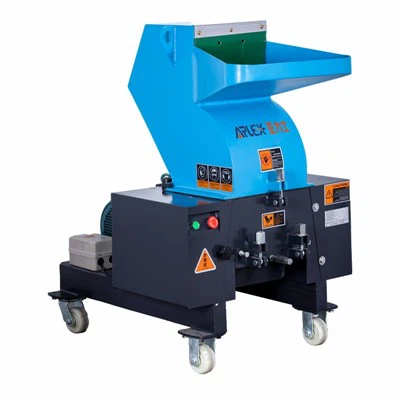
So, if you’re ready to take your injection molding operation to the next level with a quiet and efficient robot, get in touch with us. Let’s start a conversation and see how we can work together to meet your manufacturing needs.
PET Injection Moulding Machine References:
- "Industrial Noise Control and Acoustics" by Clarence W. Harris
- "Robotics in Manufacturing" by Peter Corke
Ningbo Yalishi (Arlex) Plastic Machinery Co., Ltd.
Ningbo Yalishi(Arlex) Plastic Machinery Co., Ltd. is one of the most reliable injection molding robot manufacturers and suppliers in China, featured by quality products and low price. Please rest assured to wholesale cheap injection molding robot made in China here from our factory. Customized orders are welcome.
Address: No.63, Huangsu East Road, Industrial Zone, Dongqian Lake Tourist Resort, Ningbo, Zhejiang Province
E-mail: leo@arlex.cn
WebSite: https://www.arleximm.com/
