Hey everyone, Bearing Ring Former
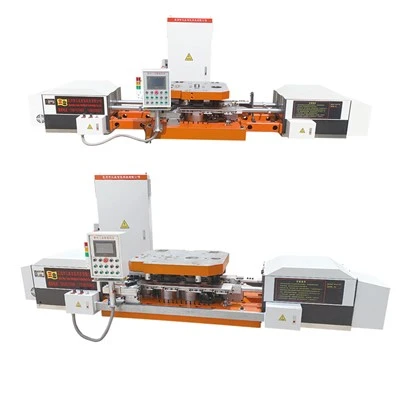
If you’ve ever worked in bearing manufacturing, you know how critical a bearing ring former is. That piece of machinery shapes raw steel blanks into the precision rings that keep everything from car engines to wind turbines running smooth. For the past 7 years, I’ve been supplying these formers to shops around the world, and one question comes up more than any other: “Can I upgrade my existing bearing ring former instead of buying a whole new one?”
Let me cut to the chase here—yes, you absolutely can. And in most cases, it’s way smarter than shelling out for brand new equipment. I’ve seen shops drop $150k on a new former when a $15k upgrade would do the trick, and they walk away with the same (if not better) performance. But before we get into the details, let’s make sure we’re on the same page. A bearing ring former’s main job is to take a heated metal billet, compress it between dies, and form it into a rough ring shape. The parts that make this work are things like the die set, the hydraulic system, the control panel, and the load sensor. All of these are upgradeable.
First off, let’s talk about the most bang-for-your-buck upgrade: the die set. I can’t tell you how many times a shop calls me saying their rings are coming out with uneven wall thickness or surface defects. 9 times out of 10, it’s not the former itself—it’s the dies. Old dies get worn down over thousands of cycles, so their precision drops. We recently supplied a set of upgraded carbide dies to a shop in Detroit that was dealing with 8% defect rates. After swapping them out, their defects went down to 1.2% in 2 weeks. Carbide dies last 3x longer than standard steel dies, and they can be custom-machined to fit your existing former without any modifications. The best part? You don’t have to retool your whole machine—just pop the old dies out and the new ones in. That’s a half-hour job, tops.
Next up, the hydraulic system. A lot of older formers have hydraulic pumps that are stuck on a fixed pressure setting. If you’re making small, thin rings, you don’t need 50 tons of pressure, but if you’re working on heavy-duty rings for construction equipment, you need that extra oomph. Upgrading to a variable pressure hydraulic controller is a game-changer. We installed one of these on a former in a Mexican shop that makes rings for farm tractors. They used to have to adjust the pressure manually every time they switched ring sizes, which took 20 minutes per run. Now, they just input the ring specs into the controller, and it adjusts automatically. Their productivity went up 18% in the first month. Also, newer hydraulic systems are more energy-efficient—another win for your bottom line. I’ve seen shops cut their power bills by 12% just from this upgrade alone.
Then there’s the control panel. If your former is older than 10 years, it’s probably running on an ancient PLC (programmable logic controller) that’s hard to find parts for. When that thing crashes, you’re stuck waiting days for a technician, and downtime costs you money. Upgrading to a modern touchscreen control panel not only makes it easier to adjust settings, but it also has built-in diagnostics that alert you to issues before they cause a breakdown. A shop in Germany had a former that went down 3 times in a month because of a faulty sensor. We swapped the old control panel for a new one that includes real-time monitoring of all sensors, and they haven’t had a breakdown since. Also, modern control panels let you save multiple run profiles, so switching between different ring sizes is as simple as tapping a screen. No more scribbling notes on scraps of paper or guessing what settings worked last time.
Wait, but what about bigger upgrades? Like adding automation? I get it—some shops want to move away from manual loading and unloading. We’ve retrofitted several old formers with robotic loading systems. It’s not for every shop, but if you’re running 24/7 shifts, it’s worth considering. One shop in Brazil added a 6-axis robot to their former, and they were able to cut one full shift of workers. The initial investment was $25k, but they saved that in labor costs in 8 months. The key here is that you don’t have to do a full automation upgrade all at once. Start with robotic loading, then add automated trimming later if you need to.
But here’s the thing: not every former is a good candidate for upgrades. You can’t take a 20-year-old former that’s held together with duct tape and hope to turn it into a state-of-the-art machine. I always tell shops to do a quick assessment first. Check the frame: is it still structurally sound? If there are cracks or warping, upgrading probably isn’t worth it. Check the motor: if it’s drawing way more amperage than it should, that’s a sign it’s on its way out. But if your former is 5-10 years old, has a solid frame, and just needs a refresh, upgrading is the way to go.
I’ve had customers come to me skeptical at first. They think that upgrading is just band-aiding a problem, but I’ve seen too many cases where it works. A shop in Canada had a former that was making rings for wind turbines, but the precision was off by 0.5mm—enough to cause issues down the line. Instead of buying a $200k new former, we upgraded their die set and control panel for $22k. Now their rings are within 0.1mm of spec, and they’ve secured a 5-year contract with a wind farm company. That’s a return on investment that’s hard to beat.
Another point to consider: lead times. If you need a new former, it can take 6-12 weeks to get it delivered and installed. Upgrades? Most of the time, we can ship parts within a week, and installation takes 1-2 days. For shops that can’t afford to be down for long, that’s a huge benefit. I remember a shop in Australia that had their former break right before a big order. We shipped a new hydraulic controller and a set of dies overnight, and their downtime was only 36 hours. If they’d ordered a new former, they would have missed their deadline and lost that order.
Now, let’s talk about common mistakes shops make when upgrading. The first one is buying parts that aren’t compatible. A lot of people go online and order cheap dies from a random seller, only to find they don’t fit their former. That’s why it’s important to work with a supplier who knows bearing ring formers inside and out. We always ask for your former’s model number, serial number, and the specs of the rings you make, so we can make sure the upgrades fit perfectly. The second mistake is upgrading everything at once. Don’t drop $50k on a hydraulic system, control panel, and robot if you only have the budget for one upgrade. Start with what will give you the most immediate return—usually the die set or control panel.
I also want to mention that upgrades can improve safety. Older formers have exposed moving parts, which is a hazard for workers. Modern control panels include safety interlocks that shut down the machine if a worker’s hand is too close to the dies. Some of our customers have mentioned that their workers feel safer now, and that’s a big deal for complying with OSHA regulations. It’s not just about productivity—it’s about protecting your team.
Wait, let’s get specific with numbers here. Let’s say you have a 8-year-old bearing ring former. Your current defect rate is 4%, your downtime is 10% per month, and your labor cost for that line is $80k a year. If you upgrade the die set ($8k) and control panel ($7k), you can cut defects to 1.5%, reduce downtime to 3%, and save $10k a year in labor. That’s a total investment of $15k, and you’ll get that back in less than a year. Plus, your productivity goes up, which means you can take on more orders. That’s a win-win.
I’m not saying buying a new former is never the right choice. If your former is older than 15 years, has a weak frame, and is constantly breaking down, it might be time for a new one. But for most shops, upgrading is the smarter move. It’s cheaper, faster, and you can tailor the upgrade to your specific needs.
At the end of the day, the question isn’t “Can you upgrade a bearing ring former?” It’s “Why wouldn’t you?” I’ve been in this game long enough to see what works and what doesn’t, and 9 times out of 10, upgrading is the way to go.
If you’re thinking about upgrading your bearing ring former, don’t hesitate to reach out. We can walk you through your options, help you assess if your machine is a good candidate, and put together a plan that fits your budget. We’ve worked with shops of all sizes, from small family-owned operations to large manufacturing plants, and we know what it takes to get your former running like new.

So stop letting your old machine hold you back. Upgrade it, boost your productivity, and take on more orders. You’ve got this.
Bearing Ring Former References
- "Bearing Manufacturing: Precision and Process Efficiency," Industrial Press, 2021.
- "Hydraulic System Upgrades for Industrial Machinery," Fluid Power Journal, Vol. 45, No. 3, 2022.
- "Robotic Retrofits in Small Manufacturing Shops," Manufacturing Engineering, Society of Manufacturing Engineers, 2023.
- "Die Wear and Its Impact on Bearing Ring Quality," Journal of Materials Processing Technology, Vol. 298, 2022.
Quanzhou Sanye Intelligent Technology Co., Ltd.
As one of the most professional bearing ring former manufacturers and suppliers in China, we have world-leading production equipment and strong manufacturing capabilities. Please rest assured to buy customized bearing ring former made in China here from our factory. Welcome to contact us for quotation.
Address: Anhai Town, Jinjiang City, Fujian Province, China
E-mail: jack_tmm@163.com
WebSite: https://www.qzsymanipulator.com/
