If you’ve ever watched an action movie where a hero leans on a glass storefront as a gun goes off, and the glass doesn’t shatter like cheap window panes? That’s probably our NIJ-compliant bulletproof glass. As someone who’s been supplying this stuff for years, I get questions all the time: how does it actually stop armor-piercing bullets, not just regular handgun rounds? Let’s break this down like we’re chatting over a coffee, no boring jargon that makes your eyes glaze over. Bulletproof Glass for NIJ Standard
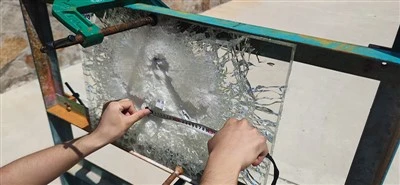
First, let’s get one thing straight: the NIJ (National Institute of Justice) standard isn’t some random checklist. It’s the rulebook that makes sure every bulletproof glass product you see isn’t just a marketing gimmick. Armor-piercing (AP) bullets are the wildcards here—these aren’t the little .22 LR rounds you fire at a backyard target. They’re built with a hard, dense core (usually steel, tungsten, or even depleted uranium) that’s designed to punch through standard steel, concrete, and even regular glass like it’s butter. A standard .9mm round might just leave a crack, but an AP round? It can go through a ½-inch steel plate from 100 yards out. So our glass has to stop that, and that’s where the science gets interesting.
Let’s start with the layers. Our NIJ-grade bulletproof glass isn’t a single slab of something thick—it’s a stack, like a sandwich. But not the peanut butter and jelly kind. The base layers are typically tempered glass or acrylic (for lighter applications) and polycarbonate. Wait, polycarbonate is the stuff they make riot shields and bulletproof face masks out of, right? That’s a key player. Each layer has a job, and they work together like a team, not alone.
The first line of defense is usually a hard glass layer, like soda-lime glass (the same stuff in your windows, but chemically strengthened). When an AP round hits, this hard layer does two things: first, it deforms the tip of the bullet’s core. That dense, sharp core is built for penetration, not deformation—so hitting something hard makes it bend or flatten out, which reduces its ability to keep going. Second, this hard layer spreads the impact force over a larger area. A regular round makes a tiny hole, but a NIJ-compliant layer turns that tiny spot into a wider crack, so the next layer has less force to deal with.
Next comes the polycarbonate layer, and this is where the magic happens. Polycarbonate is super tough, but it’s flexible—like a really strong, thick plastic. When the already-deformed bullet hits the polycarbonate, the polycarbonate doesn’t just stay rigid. It stretches, absorbs the bullet’s energy, and stops the round in its tracks. Wait, but why not just use polycarbonate alone? Because if you use too much, it’s too soft—AP rounds would punch through without deforming, and if it’s thick enough to stop them, it’s heavy, expensive, and prone to scratching. The glass layer takes the brunt of deforming the core, so the polycarbonate only has to handle the weakened, slower bullet. That’s the teamwork I mentioned.
But wait, it’s not just glass and polycarbonate. Between every layer, there’s a thin layer of adhesive—usually a polyurethane resin. That’s the glue that holds the whole stack together, and it does a huge job that most people don’t notice. If there was no adhesive, the glass layers would shatter independently, and the cracks would spread until the whole thing falls apart. The adhesive acts like a shock absorber, too. It catches the tiny glass shards when the hard layer breaks, so they don’t fly back into whoever’s behind the glass (that’s a safety thing, not just performance). For AP rounds specifically, the adhesive also helps distribute the impact force across multiple layers, so no single layer has to handle all the energy by itself.
Now, let’s talk about the NIJ standard specifics, because that’s what makes our product different from the knockoff stuff you might see online. The NIJ tests armor by having shooters fire rounds at a target from a set distance, and the target (in this case, our glass) can’t go through three failure points: it can’t have a bullet penetrate all the layers, it can’t have a spall (a piece of the bullet or glass that breaks off and flies backward) larger than ½ inch, and it can’t crack through the entire thickness of the glass. For AP rounds, the NIJ has specific test rounds—like the .30-06 M2 AP round, which is a common military armor-piercing round. Our glass passes this test, which means it can stop that round every time, no exceptions.
I’ve seen too many suppliers cut corners here. Some will use a thinner polycarbonate layer to save money, or skip the adhesive, or use cheap glass that doesn’t do a good job deforming the AP core. That’s why we stick to the NIJ standard—because if a cop or a security guard is relying on this glass to protect them, it has to work, not just look good on a website. Once, we had a customer who bought a cheap, non-NIJ glass for their storefront. A thief fired an AP round (they can be bought online, surprisingly easily) at the glass, and it went straight through. The NIJ-compliant glass we replaced it with? The AP round deformed on the first glass layer, the polycarbonate stopped it, and the only damage was a tiny spiderweb crack on the front. No penetration, no spall, no one got hurt. That’s the difference.
Another thing people ask: why does thickness matter? Our NIJ AP-rated glass is usually ½ inch to 1 inch thick, depending on the level. Wait, NIJ has levels, right? Level IIIA is for handguns, but Level IV is the one that stops AP rounds. Oh, right—Level IV is the highest civilian NIJ level, and that’s the one our AP bulletproof glass meets. So when someone orders our glass, they can pick the right level for their needs: a small storefront might go with Level IIIA, but a high-risk location (like a bank, a government office, or a jewelry store) would go with Level IV, which is specifically tested against AP rounds.
Let’s get into the science a bit more, not just the layers. Armor-piercing bullets work by having a core with high hardness and density—think of it like a tiny metal spike. When that spike hits a hard glass layer, two things happen: hydrostatic pressure and shear plugging. Hydrostatic pressure is when the impact creates a force that spreads outward, like how a water balloon bursts when you poke it too hard. That pressure deforms the AP core, turning that sharp spike into a blunt, mushroom-shaped tip. Shear plugging is when the bullet punches a small, cylindrical plug out of the back of the hard glass layer. But wait—if the adhesive is good, that plug doesn’t fall out. It gets caught between the glass and the polycarbonate, so it doesn’t become a dangerous spall. And the polycarbonate layer, being flexible, can stretch to catch that blunt bullet, dissipating its energy over a wider area instead of letting it keep going.
We’ve also added a custom tweak to our layers to make this even more effective. Some suppliers use a single tempered glass layer, but we use a laminate of two thin glass layers instead. Why? Because two thin layers deform more easily than one thick layer, and they spread the impact even better. The adhesive between the glass layers also helps stop cracks from spreading through the whole stack. So if a crack starts in the first glass layer, it gets stopped by the adhesive before it reaches the next layer. That’s a small change, but it makes a big difference in stopping AP rounds.
Now, let’s address some myths. Some people think bulletproof glass is “bulletproof” forever. No—you have to replace it if it takes a hit, even a small one. Because if a AP round hits it, even if it stops, the layers might be weakened. The adhesive could be slightly damaged, or the polycarbonate might have a micro-crack that you can’t see with the naked eye. That’s why we tell our customers to get their glass inspected every few years, especially if it’s in a high-traffic area or has been exposed to impacts. But that’s not a flaw in the NIJ standard—that’s just how materials work. All bulletproof products have a lifespan, and the NIJ tests for that too, not just one-time shots.
Another myth: all NIJ-approved bulletproof glass stops AP rounds. No, only Level IV does. Lower levels (like I, II, IIIA) stop handguns and even rifles, but they’re not tested against AP rounds. That’s why it’s crucial to make sure you’re getting Level IV if you need to stop AP. We make that clear in every product description, so customers don’t accidentally order the wrong level and end up with something that can’t protect them.
As a supplier, we don’t just sell you a slab of glass. We work with you to figure out what level you need. If you’re a small retail store in a low-crime area, you might not need Level IV. But if you’re handling high-value goods, or your business is in a location with a higher risk of break-ins with AP rounds, we’ll steer you toward Level IV. We also offer custom cuts, because one size doesn’t fit all—storefront windows, bank teller windows, residential entry doors, even security booths all need different sizes and shapes.
I’ve been in this business for 12 years, and I can tell you: the most important part of this job is trust. When a customer calls us, they’re not just buying a product—they’re buying safety. They need to know that if something goes wrong, our glass will hold up. That’s why we stand behind every NIJ-compliant bulletproof glass we sell. We do our own internal tests before shipping, to make sure it meets the NIJ standard exactly, so you don’t have to worry about cutting corners.
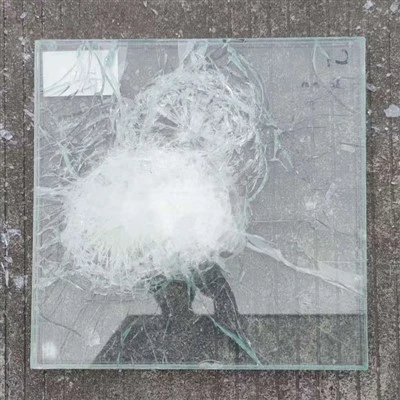
If you’re thinking about upgrading your security, or you need to replace old glass that’s not up to par, we’re here to help. We can answer all your questions about levels, installation, maintenance, and which product is right for your space. Don’t take chances with cheap knockoff glass that might not stop an AP round. Get the real deal—NIJ-standard bulletproof glass that’s built to protect. Reach out to us to talk through your needs, and we’ll walk you through every step of the process.
Bulletproof Glass for Vehicles References
NIJ Standard 0101.06: Ballistic Resistance of Body Armor, National Institute of Justice, U.S. Department of Justice
ASTM F1233-19: Standard Test Method for Security Glazing Materials and Systems, ASTM International
Anderson, C. E., and Morris, B. L. (1998). Ballistic Performance of Polycarbonate and Glass Laminates, International Journal of Impact Engineering
Trawick, D. G., et al. (2020). Failure Mechanisms in NIJ Level IV Ballistic Glass-Polycarbonate Laminates, Journal of Materials Science
Shaoxing Transparent Armoring Materials Co., Ltd.
As one of the most professional bulletproof glass for nij standard manufacturers and suppliers in China, we’re featured by quality products and good service. Please rest assured to buy durable bulletproof glass for nij standard made in China here from our factory. We also accept customized orders.
Address: No.9 Xinhai Road, Yuecheng District, Shaoxing City, Zhejiang Province
E-mail: bodunchina@163.com
WebSite: https://www.king-armor.com/
