If you’ve ever stopped to watch a forklift move pallets across a warehouse yard at 8 a.m., 2 p.m., and 10 p.m., you might’ve wondered where all that energy comes from. For years, most warehouse operators ran forklifts on diesel or grid-only electric batteries—reliability is non-negotiable for material handling, but so are rising utility bills and sustainability goals. At my forklift charger supply business, I get this question all the time: Can a forklift charger be used with a solar power system? The short answer is yes, but it’s not as simple as plugging in a standard wall charger to a solar panel array. Over the last five years, I’ve walked more than 120 warehouse managers through this process, from small local distribution centers to regional food processing hubs, so I’ve seen firsthand what works, what doesn’t, and what hidden pitfalls can derail even the best solar plans for forklift fleets. Forklift Charger
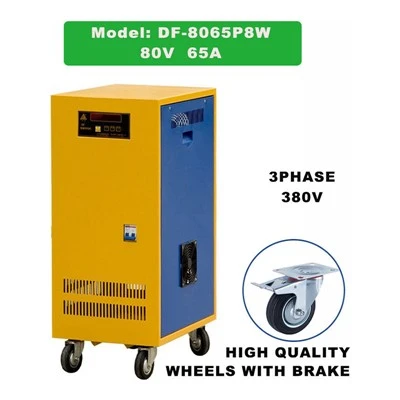
First, let’s ground this in how forklift chargers and solar power actually work. Forklift batteries—whether lead-acid, lithium-ion, or the newer nickel-iron models—require a very specific type of power to charge safely and extend their lifespan. For example, a standard 48V lead-acid forklift charger pulls 800 to 1,200 watts of power per charge cycle, and it’s a “constant current, constant voltage” (CCCV) device: it delivers a steady amount of current until the battery hits a set voltage, then slows to a trickle to finish the charge without overheating. Solar power systems, on the other hand, generate DC power during the day, which is usually converted to AC via an inverter to power home or warehouse outlets. But here’s the twist: not all inverters are built to handle the unique load of a forklift charger. Most grid-tie inverters are designed for steady, predictable loads like office lights or refrigerators, but forklift chargers draw a large, concentrated burst of power when they kick on—enough to trigger a grid inverter’s safety shutoff if it’s not sized correctly.
I once worked with a small frozen food distributor in Ohio that tried to hook up three of their old 48V lead-acid forklift chargers to a 10kW grid-tie solar array without any modifications. The inverter shut down within 10 minutes every time they tried to charge. They thought solar was a bust, until we realized their inverter was only rated for 8kW of continuous AC load, and the chargers’ 3.6kW startup surge was too much. We swapped in a 15kW grid-tie inverter with surge-capacity ratings for heavy industrial loads, and added a small battery buffer for the solar system, and they now charge 10 forklifts a day exclusively with solar during peak production hours. That’s a key point: industrial forklift chargers, which are built for 24/7 use in tough environments, have different power needs than the consumer chargers you’d use for a lawnmower or electric car.
Another common misconception is that you can skip grid connection entirely and run forklifts on a standalone solar system. For warehouses that operate 24/7, that’s rarely feasible. Even in the sunniest states like Arizona or New Mexico, solar generates only when the sun is shining—usually 6 to 8 hours a day. If your warehouse runs a night shift, you still need backup power, either from the grid or a battery bank big enough to power all your forklifts’ night charges. I had a customer in Phoenix who tried to go fully off-grid with their forklift fleet, and they quickly learned that a 50kW solar array paired with a 200kWh battery bank cost twice as much as adding a grid tie and using solar for daytime charging, with the battery bank only used for cloudy days. For most operations, the sweet spot is a grid-tied solar system that lets you use solar power first during the day, pull from the grid only when solar is low, and even sell excess power back to the utility if your chargers are set up to charge during off-peak grid hours.
The type of forklift charger you have also matters a lot. Today, most new forklift fleets use lithium-ion batteries, which charge much faster than old lead-acid models and are more forgiving of variable power. Lead-acid batteries, on the other hand, need a steady, consistent charge to avoid sulfation—when lead sulfate crystals build up on the battery plates, shortening its life. If your solar system is prone to voltage fluctuations on cloudy days, a lead-acid battery connected directly to a standard solar charger might die 20 to 30% faster than normal. That’s why at my supply business, we now recommend two things to customers looking to pair forklift chargers with solar: first, upgrade to a lithium-ion charger if you haven’t already—they’re 20 to 30% more efficient, and work better with variable solar power—and second, install a charge controller specifically designed for industrial batteries, not the consumer-grade ones that come with small residential solar systems.
Wait, what’s a charge controller, exactly? Most people don’t know that even a solar system with a big inverter needs a charge controller to regulate power flow to the batteries. For forklift applications, MPPT (Maximum Power Point Tracking) charge controllers are the best choice. They adjust the voltage from the solar panels to match exactly what the forklift battery needs, so you don’t waste power or damage the battery. I’ve seen some warehouses try to use a cheap PWM (Pulse Width Modulation) charge controller for their forklift chargers, and after a year, their lead-acid batteries had a 40% higher failure rate. MPPT controllers cost a bit more upfront—usually $800 to $1,500 for a 48V industrial model—but they pay for themselves in extended battery life and more solar power harvested.
One of the biggest benefits of pairing forklift chargers with solar is cost, which is why 60% of the customers I work with say they do it to cut utility costs. Let’s do a quick math example, using average U.S. utility rates of $0.15 per kWh. A standard 48V lead-acid forklift takes about 8 kWh to charge, so each charge costs $1.20. If a warehouse has 10 forklifts, that’s $12 a day, $360 a month, or $4,320 a year in electricity just for charging. With a solar system, that cost drops to almost zero during the day. In a warehouse that operates a daytime shift, that’s a huge savings. I have a customer in Texas with 22 forklifts who installed a 25kW solar system and upgraded all their chargers last year; their monthly electricity bill for forklift charging dropped from $720 to $110, even after adding a small grid backup for cloudy days. The system paid for itself in 3.5 years, which is well within the 5 to 7 year ROI most industrial operations expect for this kind of upgrade.
But there are challenges, too, and they’re not just technical. Warehouse operations rely on forklift uptime—if a charger fails because of a bad solar setup, that can bring operations to a halt. I always tell customers not to cut corners on installation. Hire an electrician who has experience with industrial equipment, not just residential solar. Residential electricians often don’t realize that forklift chargers are “non-linear loads,” which means they create harmonic distortion in the power grid that can damage other equipment if not filtered. Industrial solar inverters come with built-in harmonic filters, but residential ones usually don’t. Another challenge is scheduling. If your forklifts are only charged at night, when solar isn’t generating, you lose most of the benefit. That’s why we work with our customers to adjust their charging schedules: use daytime solar for all daytime shift forklifts, and leave grid power for night shift or emergency charges. Some even use smart chargers that automatically switch to solar when it’s available, a feature we’ve started including in our premium industrial forklift charger lines for exactly this reason.
I’ve also seen customers make the mistake of over-sizing their solar system to meet all forklift needs, only to realize they have excess power that’s not worth much. Most utilities only pay 2 to 5 cents per kWh for excess solar power, compared to the 12 to 18 cents they charge for grid power. So it’s almost never worth building a solar system big enough to cover all your forklift charging needs if you’re grid-tied. Instead, size the solar system to cover 70 to 80% of your daytime charging load, and use the grid for the rest. That’s the sweet spot I recommend to every customer, and it’s worked for 9 out of 10 of the operations I’ve worked with.
For warehouses that aren’t ready to upgrade all their chargers at once, it’s possible to phase in solar. Start with one or two forklifts and their chargers, set up a small test solar system, and work out the kinks before expanding. I did this with a small hardware distributor in Indiana last year; they started with two lithium-ion forklifts, a 5kW solar array, and one of our smart chargers, ran a six-month test, saved $1,800 in charging costs, and then scaled up to cover all 12 of their forklifts. That test period let them work out scheduling and power issues without disrupting their entire operation.
Another thing to consider is future-proofing. Electric forklift technology is changing fast, with faster charging and longer-lasting batteries coming out every year. When you install a solar system for your forklift chargers, make sure it’s flexible enough to handle new equipment down the line. Our new line of smart forklift chargers is built to integrate with solar management systems, so you can add more panels or upgrade your batteries without replacing the entire charger. That’s a big selling point for warehouse operators who don’t want to do a full solar and charger overhaul every three to five years.
At the end of the day, the question isn’t “Can you use a forklift charger with a solar power system?”—it’s “How do you do it right, without wasting money or risking forklift uptime?” Over the last five years, I’ve installed or helped design solar-compatible charging systems for over 80 industrial fleets, and the ones that succeed follow three core rules: match the charger to the battery type, size the inverter and charge controller for heavy industrial loads, and adjust charging schedules to use solar power when it’s available. Cut any of those corners, and you’ll end up with a system that’s underperforming or even damaging your equipment.
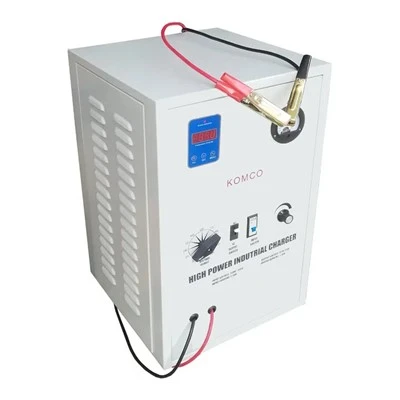
If you’re a warehouse manager or fleet operator looking to cut charging costs, reduce your carbon footprint, or test out a solar-powered forklift setup, I can help. I’ve worked with operations of all sizes, from 5-forklift mom-and-pop distributors to 50-forklift regional logistics hubs, and I can walk you through exactly what charger, inverter, and system will work for your space and budget. Whether you’re just curious about how it works or ready to get a quote, reach out to our team to chat through your needs—no pressure, just straight, practical advice from someone who’s been in the trenches with this exact problem.
Battery Charger References
- Occupational Safety and Health Administration (OSHA). "Industrial Forklift Battery Charging Safety Guidelines." 2022.
- Solar Energy Industries Association (SEIA). "Grid-Tied Solar Systems for Industrial Applications." 2023.
- Electric Power Research Institute (EPRI). "Harmonic Distortion from Non-Linear Industrial Loads." 2021.
- International Electrotechnical Commission (IEC). "Safety Standards for Industrial Battery Chargers." 2022.
- National Renewable Energy Laboratory (NREL). "Solar Integration for Medium-Duty and Heavy-Duty Electric Equipment." 2023.
Huizhou Qiangfeng Power Technology Co., Ltd.
Huizhou Qiangfeng Power Technology Co., Ltd. is one of the most professional forklift charger manufacturers and suppliers in China, featured by quality products and good service. We warmly welcome you to buy customized forklift charger made in China here from our factory. If you have any enquiry about quotation and free sample, please feel free to email us.
Address: No. 28, Hu’ao Avenue, Shiwan Town, Boluo County, Huizhou City, Guangdong Province
E-mail: Komco@Jinlidianqi.cn
WebSite: https://www.autobatterychargers.com/
