Hey guys, let’s cut to the chase—if you’re here, you’re either a landscaper, a nursery owner, or someone who’s been staring at a pile of tree support stakes in your warehouse wondering, “Wait, is this thing overkill?” As a tree support stakes supplier, I’ve heard this exact question a thousand times. And let’s be real—thicker stakes don’t always equal better. In fact, using ones that are too thick can mess up a tree’s growth way more than skimping a little on diameter. Today, I’m breaking down exactly how to tell if your stakes are too chunky, no fancy engineering degree required. Tree Support Stakes
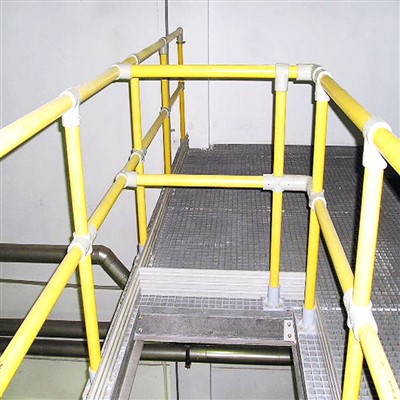
First off, let’s remember why we use tree stakes in the first place. Newly planted trees (the first 2-3 years of their life) have wobbly root systems, right? Wind, heavy rain, even curious kids can knock ’em over. Stakes hold ’em steady so the roots can anchor deep instead of moving around every time the wind blows. But here’s the secret no one tells you: trees need to sway a little. That slight movement triggers them to build stronger, thicker trunks—kind of like how lifting weights makes your muscles grow. If your stakes are so thick that they don’t let the tree move at all, you’re basically creating a weak, floppy tree that’ll snap when the first big storm hits a year later.
So how do you measure that sway? Let’s start with the basics: tree size is your first clue. I see suppliers and contractors grab the thickest stakes in the bin because they “look sturdy,” but that’s a mistake. A 10-foot-tall young maple tree doesn’t need a 2-inch diameter stake—seriously, that’s overkill. A general rule we use here at the shop is: the stake’s diameter shouldn’t be thicker than 1/5 the width of the tree’s trunk (measured at 6 inches above the ground, that’s the standard spot for tree trunk caliper, for anyone who’s curious). Wait, let’s do the math—if your tree trunk is 4 inches wide, that’s 0.8 inches, so a 1-inch stake max. If you’re using a 2-inch stake? Yeah, that’s way too thick. No brainer, right? But you’d be surprised how many people miss that.
Another quick test: hold the stake next to your tree trunk. If the stake is noticeably wider, it’s too thick. I know, that sounds simple, but when you’re in a rush at the nursery, it’s easy to grab the first heavy-duty stake you see and skip the side-by-side check. Pro tip from our team here: keep a caliper tape in your truck, but if you don’t have one, just use your thumb. If the stake is wider than your thumb? For most young trees, that’s too much. Your thumb’s like 0.75-1 inch for most adults, so that lines up perfectly with the 1/5 rule.
Now let’s talk about movement. Once the stakes are installed, go outside and give the tree a gentle push. Here’s what you want: it should move 2-3 inches side to side, no more. If it doesn’t move at all? That’s the stakes holding it way too tight, which means the stakes are too thick (or you drove ’em too deep, but let’s stick to thickness today). If you push and the tree wiggles 6+ inches, that’s not enough support, but we’re focused on the “too thick” scenario here. I had a customer last summer who called us panicking—his trees were all snapping in July thunderstorms. When we showed up, his stakes were 2.5 inches thick for 4-inch trunk trees. No wonder! The trees couldn’t sway, so their trunks never built strength, and when the wind hit, they just broke at the base. Total rookie move, but it’s super common.
Wait, what about older trees? I know, the rule changes a little for mature trees, but even then, stakes for mature trees that are only being stabilized temporarily (like after construction damage) shouldn’t be too thick. But most of the time, when people ask about stake thickness, it’s for newly planted, young trees—that’s where the overkill happens most. Let’s clarify: mature trees rarely need stakes at all, unless there’s a specific issue, so if you’re using stakes on a 15-year-old oak, double-check that thickness—you probably don’t even need stakes, let’s be real.
Another sign your stakes are too thick: rubbing. If the stake is so big that it’s pressing hard against the tree trunk, you’re gonna get bark damage. That’s a huge problem because bark is how trees transport water and nutrients. If you’ve got a thick stake digging into the bark, you might see oozing sap, or even a sunken spot where the bark is damaged. We once had a landscaper come in complaining that his trees were dying a year after planting, and his stakes were so thick that the strap around the tree was pulling tight against the bark, plus the stake itself was rubbing a 6-inch long gash into the side. We swapped him to thinner, flexible stakes, and he fixed the issue—no more dying trees. Thicker stakes are stiffer, right? So they don’t give at all, which means they rub more. Thinner stakes flex a little, so they don’t press as hard against the trunk. That’s a key point I don’t think enough people talk about.
Let’s also chat about material, because that affects how “thick” a stake actually is. A wooden stake vs. a fiberglass stake—same diameter, but fiberglass is way stiffer. So a 1-inch fiberglass stake is equivalent to a thicker wooden stake in terms of rigidity. Wait, that’s a big one! I’ve had customers order 1-inch fiberglass stakes thinking they’re the same as 1-inch wood, but because fiberglass doesn’t flex, it’s too stiff for most trees. So if you’re using a stiff material like metal or fiberglass, you might need to go a little thinner than if you’re using soft wood (like pine) that flexes naturally. Just something to keep in mind when you’re picking your stake type along with thickness.
Common mistakes I see all the time: going for the “heaviest duty” option every time, not accounting for tree species, and measuring the trunk at the wrong height. Wait, measuring height is crucial—if you measure the trunk at ground level, it looks way thicker than at 6 inches up, which is the official caliper spot. I can’t tell you how many times someone’s brought me a trunk measuring 5 inches at ground level, so they buy a 1-inch stake, but when we measure at 6 inches, it’s only 3 inches, so the 1-inch stake is way too thick. Don’t skip that measurement spot—trust me, it makes all the difference.
Let’s test this with an example. Say you’re planting a 5-foot-tall crabapple. Trunk caliper at 6 inches is 1.2 inches. 1/5 of that is 0.24 inches, so max stake diameter is like 0.25 inches? Wait, no, wait—hold on, I simplified the rule a little, but for smaller trees (under 2 inches caliper), it’s okay to bump up to 1/4 the trunk width, not 1/5. That makes more sense, right? A tiny tree needs a tiny stake, not a toothpick, but not a big, thick stick either. So for that 1.2-inch trunk, a 0.3-inch (about 3/8 inch) stake is perfect. If you use a 1-inch stake? Way too thick, no flex, tree can’t sway, weak trunk. That example’s super relatable for anyone who works with small ornamental trees.
Another way to think about it: how long do you plan to keep the stakes on? If you’re only leaving them on for 1 year (which is the sweet spot for most trees—after that, you should remove them), you can get away with a little thicker stake than if you’re leaving them on for 2+ years. Wait, why? Because over time, even thin stakes can start rubbing if they’re not adjusted, but thicker stakes stay stiff longer and cause more damage over time. So if you’re using long-term stakes, err on the thinner side. We always tell customers to remove stakes after 1-2 years max, by the way—leaving them on too long is another mistake, but that’s a whole other blog post.
Let’s talk about when thick stakes actually ARE okay. Sometimes, if you’re planting a tree in a super windy area—like a coastal spot, or a field that gets constant gusts—you might need a stiffer stake. But even then, you don’t need a stake thicker than 1/4 the trunk width, and you should use a flexible material, or add a second, slightly thinner stake instead of one thick one. Two thinner stakes on either side of the tree actually give better support than one thick one, and they let the tree sway a little between them. That’s a trick we teach all our clients, because it solves the “too thick” problem entirely without sacrificing support.
I’ve also seen people confuse “stake thickness” with “number of stakes.” Like, they use four super thick stakes, thinking that’s more support, but no—same problem, no movement. Two thinner stakes are way better. If you need more support, add a third thinner stake, not a thicker one. That’s a game-changer for a lot of folks.
Now, let’s wrap this up with a quick checklist you can use right now, no tools needed:
- Measure trunk caliper at 6 inches above ground (not ground level, not 3 feet up).
- For most young trees, stake diameter should be 1/5 to 1/4 that number.
- Side-by-side test: hold the stake next to the trunk. If it’s noticeably wider, it’s too thick.
- Sway test: push the tree gently. It should move 2-3 inches. No movement? Stakes are too thick.
- Check for rubbing: if the stake is pressing hard against the bark, leaving a mark, it’s too thick or installed wrong.
And remember, if you’re using stiff materials (fiberglass, metal), go thinner than you would for flexible wood stakes. If you’re in a super windy spot, use multiple thinner stakes instead of one thick one.
At the end of the day, tree support stakes are about balancing stability and gentle movement. Too thick, and you create a tree that’s weak and prone to breaking. Too thin, and it gets knocked over. As a tree support stakes supplier, our whole thing is helping you get that balance right—no guesswork, no overpaying for overkill, no dead trees a year later.
If you’re not sure what size is right for your trees, or you need help picking the right stakes that aren’t too thick (but still hold ’em steady), hit us up. We work with landscapers, nurseries, and anyone who needs reliable tree support gear, and we’re happy to walk you through sizing for free—no hard sell, promise.
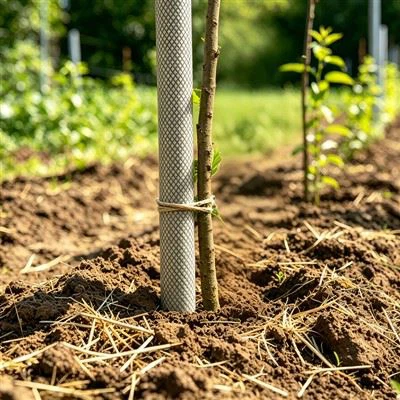
Now, let’s keep those trees healthy and strong, not floppy or broken. That’s what it’s all about.
Fiberglass Handrail and Fencing References:
- Harris, R. W., Paul, J. E., & Davis, T. D. (2004). Arboriculture: Integrated Management of Landscape Trees, Shrubs, and Vines (4th ed.). Prentice Hall.
- American National Standards Institute (ANSI). (2017). Standard for Tree Care Operations – Tree, Shrub, and Other Woody Plant Maintenance – Minimum Requirements (ANSI A300).
- Watson, G. W., & Himelick, E. B. (1997). Principles and Practice of Planting Trees and Shrubs. International Society of Arboriculture.
Yizheng Wanteng Composites Co., Ltd.
As one of the most professional tree support stakes manufacturers and suppliers in China, we’re featured by quality products and good service. Please rest assured to wholesale bulk slip-resistant tree support stakes for sale here from our factory. Contact us for pricelist.
Address: No. 20 Longyi Road, Qingshan Town Industrial Park, Yizheng City, Jiangsu Province, China
E-mail: mark@wantfrp.com
WebSite: https://www.wantfrp.com/
