If you’ve ever stood in a warehouse at 2 a.m., watching a stretch wrapper tug at a pallet load like it’s trying to fix something broken, you know the last thing you want is a system that can’t handle the film sitting right next to it. I’ve been selling stretch wrapper control systems for 12 years, and more times than I can count, customers have come to me frustrated because their new machine works great with the thin stretch film they tested in the lab—then chokes on the thicker, load-stabilizing film they actually need for their pallet of steel coils or cinder blocks. That’s the kind of pain I got into this business to fix, and it’s why compatibility between a control system and stretch film isn’t just a technical buzzword—it’s the difference between a shift that runs on time and one that leaves you playing catch-up for 8 hours. Let’s break this down like we’re standing in a customer’s warehouse, not a textbook. Stretch Wrapper Control System
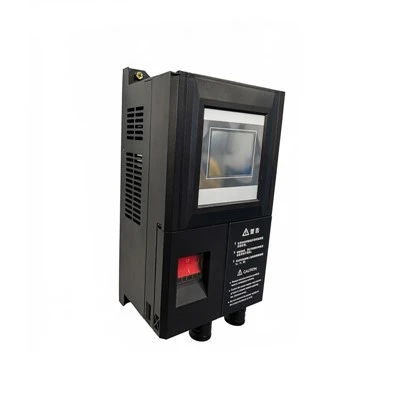
First, let’s get the basics out of the way: stretch film isn’t a one-size-fits-all product. You’ve got hand stretch, machine stretch, pre-stretched, cast, blown, even specialty films for cold storage or food-grade pallets. I’ve seen customers grab a $0.08 per pound blown film because it’s cheap, only to find their control system’s tension settings can’t pull it tight enough to hold a load together. Or they spring for a premium pre-stretched cast film that cuts their film use by 20%, only to have the system’s pull rollers slip so bad it wastes the exact savings they thought they’d get. The control system is the middleman here—it’s the brain that tells the wrapper how much film to pull, how tight to stretch it, and how many wraps to apply. If that brain isn’t calibrated to talk to whatever film you’re using, nothing else works.
Let’s talk about the two most common film types, because they’re where 90% of compatibility problems pop up, and why I train my team to ask customers about these before we even talk about control system specs. First is cast stretch film. It’s made by melting resin and casting it onto a cool drum, which gives it a smooth, uniform surface and consistent thickness. I’ve had a lot of packaging engineers tell me cast film is the “easy” one for machines, but that’s only if the control system has the right tension feedback. Cast film is usually thinner (15 to 80 gauge) and more elastic, so if your system uses a fixed-tension setting (most old systems do), you either pull too tight and break the film, or too loose and the load shifts. A good control system uses real-time load cells or ultrasonic sensors that adjust tension as the film runs—if the film is thinner, it pulls less; if it’s thicker, it adjusts automatically. Last year, a palletizer company in Detroit came to me because their old fixed-tension wrapper broke 12 rolls of cast film a day. We swapped in our system, which has dynamic tension adjustment, and they cut film breaks to two a week. The difference was the control system could “feel” the film instead of just hitting a number it was told.
Then there’s blown stretch film, which is made like bubble wrap—you extrude resin into a tube, blow it up like a balloon, then cool it. It’s thicker (usually 50 to 150 gauge), stiffer, and has more “memory,” meaning it likes to snap back to its original shape if you stretch it too far. That’s a big problem for control systems that use traditional pre-stretch rollers, which work by stretching the film between two spinning rollers. Blown film’s stiffness means it can tear if the rollers stretch it beyond 300%—whereas cast can go up to 400% no problem. I learned this the hard way 8 years ago, when a construction supply company bought a basic control system and tried to use 100-gauge blown film for their lumber pallets. Every time the wrapper ran, the film would snap 3 feet from the roll, and the operator would have to stop and rethread it every 10 minutes. I went to their warehouse, watched the machine run, and realized the control system’s pre-stretch setting was stuck at 350%—too high for blown film. We adjusted it to 250% with our system, which has adjustable pre-stretch ratios tied directly to film type, and their downtime dropped by 90%. The key here is that the control system can’t have a one-size-fits-all pre-stretch function; it has to let you set that based on the film’s stiffness, which manufacturers list but most old systems don’t account for automatically.
Now, the wild cards: specialty films, and this is where most control systems fall flat. I’m talking about stretch hood film, anti-static film, UV-resistant film for outdoor loads, even biodegradable film that’s become huge for companies trying to green their supply chains. Two years ago, a food distributor in Chicago came to me because they’d switched to a compostable stretch film to hit their sustainability goals, and their control system was shredding it. Biodegradable film is made from plant-based resins, so it’s more brittle than PE (polyethylene) film, and it has way less “give.” The old control system kept pulling it too tight, and since it wasn’t calibrated to recognize the film’s low elongation, it would tear during the top wrap—where the tension is usually highest. The fix wasn’t a new wrapper, it was a control system that has a “specialty film” mode: it reduces tension on the top and bottom wraps, slows down the pull rollers by 15%, and adjusts the wrap count so you don’t waste film. That customer’s film use went up a tiny bit (only 3%) but they hit their sustainability target, which was way more important to them. The mistake most customers make is thinking their old control system can just “work” with new specialty films—it can’t, because those films have different physical properties that the system wasn’t built to handle.
I also want to talk about something a lot of people don’t consider: film roll core size and diameter. This sounds trivial, but I’ve had customers waste hundreds of dollars in setup time because their control system doesn’t have auto-detection for roll size. If a film roll is 10 inches in diameter, the control system has to know how much film is left to adjust pull speed and tension. If it’s set for an 8-inch roll, it will pull too much film at the end of the roll when the diameter shrinks, leading to breaks. Last quarter, a manufacturing plant in Indianapolis told me they were going through 15 rolls of film a week instead of 10, and they traced it back to their old system guessing roll size. Our control system has a built-in roll diameter sensor that detects when the roll is new or nearly empty, and adjusts all settings automatically. The difference? They cut film use by 30% in two months, just from that one compatibility feature. It’s not just about the film type—it’s about the system being able to adapt to the physical size and condition of the film roll, too.
Now, let’s get real: not all control systems are built the same. When I talk to customers, I hear a lot of them regret buying a cheap system that “works with all films” only to have it break under real-world conditions. A lot of generic control systems use a fixed set of parameters that work for standard films, but not for anything outside of that. The best control systems for film compatibility are the ones that are modular—meaning you can update the software to add new film profiles as they hit the market. A few years ago, stretch hood film became popular for heavy loads of furniture, and most old control systems couldn’t handle it because it’s thicker and needs more tension at the base of the pallet. We rolled out a software update for our control system that added a stretch hood film profile, and customers who bought our system didn’t have to replace anything—they just downloaded the update, and it worked. That’s the kind of compatibility that matters long-term, not just when you unbox the machine.
I also want to address a myth I hear all the time: “We can just adjust the tension manually if the film doesn’t work.” Let’s be honest—when you’re running 100 pallets an hour, one operator can’t adjust tension every single time the film roll changes, or when the weather gets hot (yes, weather affects film! If it’s 90 degrees outside, stretch film is softer and more elastic, so you need less tension than you do in 30-degree weather). A manual adjustment is going to be inconsistent, leading to some loads that are too loose and some that are too tight, which wastes film and damages products. A good control system does that adjustment for you automatically, because it’s calibrated to account for both film type and environmental conditions. Last winter, a customer in Minnesota told me their old system would tear film every time it got cold, because it didn’t adjust tension for lower temperatures—film becomes stiffer in cold weather, so you need more tension, not less. Our system has a built-in temperature sensor that adjusts tension and pre-stretch based on ambient conditions, and they haven’t had a film tear in 10 months. That’s compatibility that works even when the weather doesn’t.
So what should you look for when choosing a control system if film compatibility is a priority? First, ask about film profiles. Does the system come with pre-set profiles for cast, blown, specialty, and biodegradable films? Can you create a custom profile if you have a unique film? Second, check for dynamic feedback. Does it use load cells, sensors, or any real-time data to adjust tension and pre-stretch, or is it just a fixed setting? Third, look for modularity and software updates. Can you add new film profiles without replacing the whole control system? Finally, ask about roll size and environmental adjustments. Does it detect roll diameter automatically, and adjust for temperature or humidity? Over the years, I’ve seen customers skip these questions and regret it. I had a customer in Texas buy a cheap system because it was $2,000 less, and six months later, they had to spend $15,000 to replace the control system because it couldn’t handle the UV-resistant film they needed for outdoor pallets. That “savings” cost them 7 times more in the end.
At the end of the day, the compatibility between your stretch wrapper control system and film isn’t a technical detail—it’s the backbone of your packaging operation. When the two work together, you see less downtime, less film waste, fewer damaged loads, and lower operational costs. When they don’t, you’re dealing with frustrated operators, wasted materials, and missed deadlines. I’ve spent my career building control systems that adapt to the films customers use, not the other way around, because that’s what makes sense for their business. If you’re tired of fighting with your control system and film every shift, or if you’re switching to a new film and want to make sure your setup works, I’d love to sit down and chat. We can talk through the films you use, the loads you wrap, and what you need to keep your operation running smoothly. No sales pitch, no fine print—just real advice from someone who’s been in this warehouse floor for more than a decade.
Industrial Fan Regulator References:
- Packaging Machinery Manufacturers Institute. (2022). Stretch Film Compatibility Guide for Industrial Packaging. Alexandria, VA: POMI.
- American Society for Testing and Materials. (2021). Standard Test Methods for Tension and Pre-Stretch of Stretch Wrap Films. West Conshohocken, PA: ASTM International.
- Sustainable Packaging Coalition. (2023). Compostable Stretch Film Performance Metrics for Automated Wrapping Systems. San Francisco, CA: SPC.
Wuxi Rstar Electric Co., Ltd.
With abundant experience, we are one of the most professional stretch wrapper control system manufacturers and suppliers in China. Welcome to wholesale bulk customized stretch wrapper control system at competitive price from our factory. If you have any enquiry about quotation, please feel free to email us.
Address: 9th Floor, Building 9, Shengfeng Lianzhi Valley, No.67 Zhujiang Road, Xinwu District, Wuxi City
E-mail: rstarbz@163.com
WebSite: https://www.rstar-wx.com/
