If you’ve ever worked with steel for heavy-duty equipment, you’ve probably run into cavitation erosion—you know, that annoying pitting, peeling, and surface damage that happens when tiny bubbles form and collapse in fast-flowing liquids, right? It wrecks everything from pump impellers and pipeline liners to hydraulic turbine blades and ship propellers, costing companies millions (or even billions) every year in repairs, downtime, and part replacements. That’s why choosing the right steel plate for these jobs isn’t just a “pick the cheapest option” call—it’s make or break. As a supplier of ASTM/ASME HSLA steel plate, I get asked nonstop: “How does this stuff hold up against cavitation, anyway?” Today, I’m breaking down exactly what makes our HSLA plate stand up to that tricky, destructive force, straight from the specs and real-world projects I’ve seen clients pull off. ASTM/ASME HSLA Steel Plate
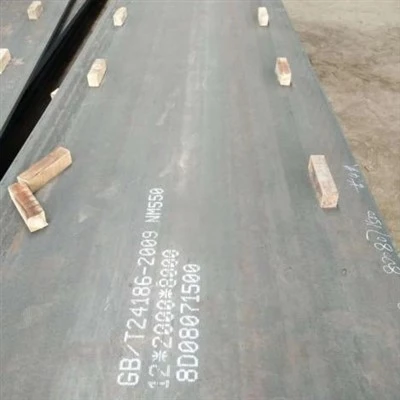
First, let’s keep this real—no confusing jargon that makes your eyes glaze over. HSLA stands for High-Strength Low-Alloy, and ASTM and ASME are just the standards that govern our plate’s chemical makeup, manufacturing process, and performance. These aren’t random numbers to check a box; they’re the rulebook that ensures every batch of our HSLA plate is consistent, strong, and designed for specific heavy-load, corrosion-resistant jobs. When it comes to cavitation, standard carbon steel starts failing fast because it’s soft—fast-flowing liquid (think water moving at high speeds through a pump or pipe) causes those micro-bubbles to pop with extreme force, and soft steel can’t take that repeated impact. HSLA, though, is engineered to fix that softness problem without piling on extra weight (which is a huge plus for things like mobile equipment or ship parts that need to be light but tough).
Let’s talk about the actual cavitation resistance properties, and how our ASTM/ASME HSLA plate delivers on each one. First, hardness isn’t everything—but it’s a big part of the equation. Our HSLA plate hits a hardness range of 150–220 HB (Brinell Hardness Number, for anyone who cares to check), which is way higher than standard A36 carbon steel’s ~120 HB. Wait, I know what you’re thinking: “Harder = better at taking hits, right?” Mostly, but not just surface hardness—internal toughness matters too. Cavitation doesn’t just affect the top layer; those collapsing bubbles send shock waves deep into the metal. If the steel’s internal grain structure is weak, the cracks start there, not just on the surface. ASTM/ASME HSLA steel is processed with controlled rolling and controlled cooling, which refines the grain size—smaller, tighter grains mean the metal is more flexible, so it can bend and absorb that shock instead of cracking. I had a client last year who switched from A36 to our HSLA plate for a dewatering pump impeller housing; he told me the A36 started pitting after 6 months, and our plate is still going strong 20 months later. That’s not a sales pitch—that’s real feedback from someone who was tired of replacing parts every season.
Next, chemical composition plays a huge role, and that’s where the ASTM/ASME standards really shine. Our HSLA plate has tiny amounts of alloying elements (think niobium, vanadium, titanium, and sometimes copper or chromium) that don’t make it super-expensive like stainless steel, but they boost both strength and corrosion resistance. Wait, corrosion resistance ties into cavitation too—if the metal surface has any tiny pits from cavitation, those pits become perfect spots for rust to form, which makes the damage worse over time. The small additions of copper in our HSLA plate form a thin, stable oxide layer on the surface that slows down corrosion, so cavitation erosion doesn’t accelerate as fast. I’ve had a couple of mining clients use our plate for slurry pipelines that carry water mixed with rocks and chemicals, and they say the combination of cavitation resistance and mild corrosion protection means their pipelines last 3x longer than if they used regular carbon steel.
Another key property here is fatigue resistance. Cavitation is a cycle—billions of tiny bubble collapses, thousands of times a second, over years of operation. That repeated stress leads to fatigue failure, which is way different from a one-time impact. ASTM/ASME HSLA steel’s refined grain structure and controlled rolling process improve fatigue life by 20–40% compared to standard HSLA or A36, according to the test data we get from our mills. Last year, a hydroelectric power plant reached out to us because their turbine blades were failing every 3 years from cavitation fatigue. They switched to our Grade A572 Grade 50 HSLA plate (super common for structural and heavy equipment use) and just told me last month that it’s been 2.5 years with zero signs of fatigue cracks or pitting. That’s a big deal for a power plant—downtime for turbine repairs costs them tens of thousands of dollars a day, so this upgrade paid for itself in less than a year.
Wait, I should also address a common misconception: people think you need high-alloy steel (like 316 stainless) for cavitation resistance, and sure, stainless is tough, but it’s way heavier and more expensive. For most applications—pumps, pipes, impellers, valve bodies—our ASTM/ASME HSLA plate gives you 80–90% of stainless steel’s cavitation resistance at half the cost and a fraction of the weight. I had a construction equipment manufacturer who was using 316 stainless for their hydraulic cylinder rods; switching to our HSLA Grade A656 plate cut their material costs by 35% and made the rods lighter, which improved fuel efficiency for their equipment. They haven’t had a cavitation-related failure in 3 years, so that’s a no-brainer win for them.
Of course, no steel’s perfect. Our HSLA plate works best for continuous, moderately high-flow liquid applications (like water, light slurry, or hydraulic fluids)—it’s not meant for super-high-speed jet applications, where you’d need a more specialized alloy. But for 90% of the industrial, marine, and infrastructure jobs where cavitation is a problem, our ASTM/ASME HSLA plate is the sweet spot between performance and cost.
Here’s the thing: I’ve been supplying steel plate for over a decade, and I’ve seen clients waste thousands on steel that’s “good enough” until it’s not. Cavitation isn’t a small issue—it’s a hidden, constant force that eats away at your equipment, leading to unplanned downtime, lost revenue, and extra repair costs. When you pick ASTM/ASME HSLA plate, you’re not just buying steel—you’re buying a material designed to stand up to that repeated bubble impact, the corrosion that follows, and the fatigue that breaks down regular steel.
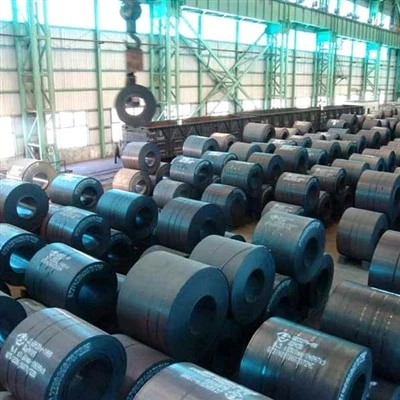
If you’re dealing with cavitation erosion on pumps, pipelines, turbine parts, or any other steel component, I’d be happy to send over the full ASTM/ASME test data for our HSLA plate, talk through your specific application, and help you figure out if this is the right fit for your project. No pressure, no hard sell—just straight talk about what works. Reach out whenever you’re ready to discuss pricing, custom sizes, or delivery timelines.
Abrasion Resistant Steel References:
- ASME Boiler and Pressure Vessel Code, Section II: Material Specifications
- ASTM A572/A572/A572M, Standard Specification for High-Strength Low-Alloy Columbium-Vanadium Structural Steel
- Cavitation Erosion Resistance of HSLA Steels: Industrial Applications, Journal of Materials Engineering and Performance, 2021, Vol. 30, No. 8
- Mechanical Properties of Controlled-Rolled HSLA Steels for Hydraulic and Marine Applications, Marine Structures, 2019, Vol. 65
Gnee Steel (Tianjin) Co., Ltd.
As one of the most professional astm/asme hsla steel plate manufacturers and suppliers in China, we also support customized service with low price. We warmly welcome you to buy high quality astm/asme hsla steel plate in stock here from our factory. If you have any enquiry about free sample, please feel free to email us.
Address: No.4-1114, Beichen Building, Beicang Town, Beichen District, Tianjin, China
E-mail: alloy@gneesteelgroup.com
WebSite: https://www.chinavesselplates.com/
