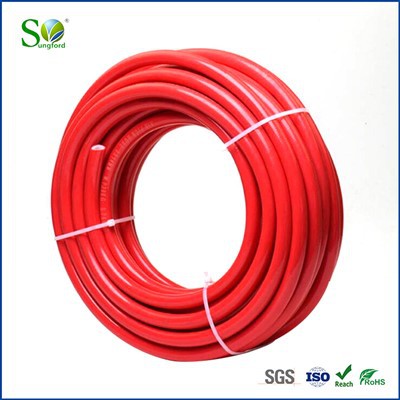
As a supplier of welding hoses, I often encounter questions from customers regarding the compatibility of welding hoses with shielding gases. This topic is crucial as it directly impacts the efficiency, safety, and quality of welding operations. In this blog, I’ll delve into the details of whether a welding hose can be used with a shielding gas, exploring the technical aspects, considerations, and best practices. Welding Hose
Understanding Welding Hoses and Shielding Gases
Welding hoses are essential components in welding setups. They are designed to transport various substances, including fuel gases, oxygen, and in our context, shielding gases. Shielding gases play a vital role in welding. They protect the weld pool from atmospheric contaminants such as oxygen, nitrogen, and water vapor, which can cause defects in the weld, like porosity, brittleness, and reduced strength.
Common shielding gases used in welding include argon, carbon dioxide, helium, and mixtures of these gases. Each gas has specific properties that make it suitable for different types of welding processes and materials. For example, argon is often used for TIG (Tungsten Inert Gas) welding of non – ferrous metals like aluminum and stainless steel because it provides a stable arc and good weld bead appearance. Carbon dioxide is more commonly used in MIG (Metal Inert Gas) welding of mild steel due to its lower cost and ability to increase the deposition rate.
Compatibility of Welding Hoses with Shielding Gases
The compatibility of a welding hose with a shielding gas depends on several factors. First and foremost is the material of the hose. Welding hoses are typically made from rubber, synthetic polymers, or a combination of both. These materials need to be resistant to the chemical properties of the shielding gas.
For instance, some shielding gases can react with certain rubber compounds over time, causing the hose to degrade. Oxygen and some oxidizing gases can cause rubber to harden and become brittle, which can lead to cracks and leaks. On the other hand, some synthetic polymers are more resistant to chemical attack and can be a better choice for use with a wider range of shielding gases.
Another important factor is the pressure rating of the hose. Shielding gases are often stored in high – pressure cylinders, and the hose must be able to withstand the pressure without bursting or leaking. The pressure rating of a welding hose is determined by its construction, including the thickness of the inner tube, the reinforcement layers, and the outer cover.
Types of Welding Hoses for Shielding Gases
There are different types of welding hoses available for use with shielding gases.
Single – Line Hoses
Single – line hoses are designed to carry a single shielding gas. They are simple and straightforward, suitable for applications where only one type of shielding gas is required. These hoses are often used in small – scale welding operations or in situations where the welding process is relatively simple.
Multi – Line Hoses
Multi – line hoses, on the other hand, can carry multiple gases simultaneously. This is useful in more complex welding setups where different gases may be required at different stages of the welding process or for different types of joints. For example, in some advanced MIG welding applications, a multi – line hose can be used to supply a mixture of argon and carbon dioxide, allowing for better control of the welding process.
Considerations for Using Welding Hoses with Shielding Gases
Gas Purity
Maintaining the purity of the shielding gas is crucial for the quality of the weld. The welding hose should not contaminate the gas. Some hoses may release small amounts of contaminants, such as plasticizers or other chemicals, into the gas stream. This can affect the performance of the shielding gas and lead to weld defects. Therefore, it’s important to choose a high – quality hose that is designed to minimize gas contamination.
Temperature and Environmental Conditions
The temperature and environmental conditions in which the welding operation takes place can also affect the performance of the welding hose. Extreme temperatures can cause the hose to expand or contract, which may lead to leaks or damage. Additionally, exposure to sunlight, moisture, and chemicals in the environment can degrade the hose over time. It’s important to select a hose that is suitable for the specific temperature and environmental conditions of the welding site.
Hose Length and Diameter
The length and diameter of the welding hose can also impact the flow of the shielding gas. A longer hose may result in a pressure drop, which can affect the consistency of the gas flow. Similarly, a hose with a smaller diameter may restrict the flow of gas, leading to insufficient shielding. It’s important to choose the appropriate hose length and diameter based on the requirements of the welding process and the distance between the gas source and the welding torch.
Best Practices for Using Welding Hoses with Shielding Gases
Regular Inspection
Regular inspection of the welding hose is essential to ensure its safety and performance. Check for signs of wear, such as cracks, abrasions, and bulges. Also, inspect the fittings and connections for tightness and signs of leakage. Any damaged hoses should be replaced immediately to prevent accidents and ensure the quality of the weld.
Proper Storage
When not in use, the welding hose should be stored properly. It should be kept in a cool, dry place away from direct sunlight and chemicals. Coiling the hose neatly and avoiding sharp bends can help prevent damage and prolong its lifespan.
Correct Installation
Proper installation of the welding hose is crucial. Make sure the hose is connected securely to the gas source and the welding torch. Use the appropriate fittings and follow the manufacturer’s instructions for installation. Incorrect installation can lead to leaks and other problems.
Conclusion
In conclusion, a welding hose can be used with a shielding gas, but it’s important to choose the right hose based on the type of shielding gas, the welding process, and the environmental conditions. By considering factors such as material compatibility, pressure rating, gas purity, and proper maintenance, you can ensure the safe and efficient use of welding hoses with shielding gases.
TPU Hose If you’re in the market for high – quality welding hoses for use with shielding gases, I’d be more than happy to discuss your specific requirements. Our company offers a wide range of welding hoses that are designed to meet the needs of various welding applications. Contact us to start a conversation about how we can provide the best solutions for your welding needs.
References
- AWS (American Welding Society) Standards on Welding Equipment and Gas Systems
- Manufacturer’s Guides for Welding Hoses and Shielding Gases
- Technical Papers on Welding Gas Compatibility and Hose Performance
Weifang Sungford Industrial Co.,Ltd
As one of the most professional welding hose manufacturers and suppliers in China, we’re featured by quality products and good service. Please rest assured to buy welding hose made in China here from our factory.
Address: Economic Development Zone, Changle County, Weifang City, Shandong Province, China
E-mail: exports@sungflexhose.com
WebSite: https://www.sunghose.com/
